| From Ari’s Top 5, March 25
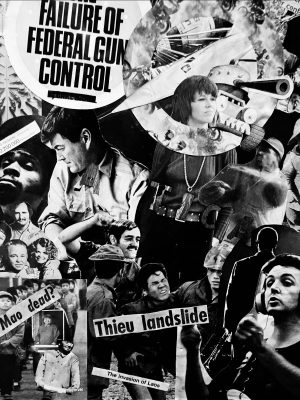 Last week, while struggling to sort through how to stay centered and lead effectively through the ongoing rise of autocracy on a national level—as well as work through some of the feelings of loss I’ve shared in recent weeks—I went back to Adam Gopnik’s October 2025 essay in The New Yorker, “How to Endure Authoritarianism.” In it, Gopnik takes a good, long look at the various beliefs and practices of an array of Eastern Europeans who effectively resisted Soviet and Russian rule: Last week, while struggling to sort through how to stay centered and lead effectively through the ongoing rise of autocracy on a national level—as well as work through some of the feelings of loss I’ve shared in recent weeks—I went back to Adam Gopnik’s October 2025 essay in The New Yorker, “How to Endure Authoritarianism.” In it, Gopnik takes a good, long look at the various beliefs and practices of an array of Eastern Europeans who effectively resisted Soviet and Russian rule:
The essential insight of the dissidents … was that resistance against authoritarianism begins as much in the pre-political or nonpolitical arenas as it does in politics. That was Václav Havel’s constant point in the former Czechoslovakia, about the necessity of building “parallel structures” to the centralized authoritarian one, writing that all attempts by society to resist the pressure of the system have their beginnings in the pre-political arena.
What follows is an exploration of one small technique that could help make some of what the Eastern European dissidents recommended possible. It aligns closely with the guidance from Gopnik’s interviewees: seek out small, practical, and positive ways to stay true to ourselves and our values.
On the surface, this process I’ve been exploring is not political in the least, though certainly many artists have used it to express their political views. It’s all about the creation of calm, centered spaces in our own minds—nurturing self-reflection and clarity—so that we can live better lives and lead more effectively while we’re at it.
In the spring of 1966, leadership guru Peter Drucker published The Effective Executive, the 9th of 40 books he would write over the course of his 94 years on the planet. I read it not long after we opened the Deli. It’s loaded with insightful ideas, including Drucker’s belief that effective leaders are not born knowing how to be great leaders. We all, he makes clear, need to learn leadership effectiveness:
I have not come across a single “natural”: an executive who was born to be effective. All the effective ones had to learn to be effective. And all of them had to practice effectiveness until it became a habit. But all the ones who worked to make themselves effective executives succeeded in doing so. Effectiveness can be learned—and it also has to be learned.
Drucker also adds a reminder of what here in the Zingerman’s Community of Businesses (ZCoB) we would think of as Natural Law of Business #8: “To get to greatness you’ve got to keep getting better, all the time!” No matter how much good stuff I may have going, there’s always more out there to benefit from. “Knowledge,” Drucker reminds all who will listen, “has to be improved, challenged, and increased constantly, or it vanishes.”
I can’t honestly remember which experts I was listening to the other day, but as their conversation about the news grew ever grimmer, one speaker tried to frame things in a more hopeful light: “Look, things are starting to swing back. In five years, maybe 10, I’m really confident we’ll find ourselves in an age of national generosity and dignity.” I agree. Regardless of how things look today, we are headed in the right direction!
At the same time, I’m not sure I have the patience to sit back and wait. Five years may be short in the grand sweep of history, but it’s a really long time on a personal level—I need help a whole lot sooner than that! As you might know from reading Managing Ourselves, I already do many things to stay centered, but exceptional times call for extra self-management tools. Starting to work more with poetry and a poetic approach to leadership have absolutely been a plus. But still, I’ve found myself wanting for something else, another approach that wouldn’t take a ton of time, or cost a lot, and could be done regularly.
As I was reflecting on the idea of new skills I might want to explore, one suddenly jumped out at me that I had never given much thought to in my life: collage. It could well be, I began to realize, just what I’ve been looking for. Collage offers a path to put things together in new and often eye-opening ways, to reconsider well-accepted constructs, and to start to see new connections. The practice helps us improve our knowledge by adding another creative tool to our leadership toolkit.
It might be easy to dismiss collage as some silly thing we learned in school as sixth graders, but, I see now, there’s so much more to it. As I explored collage further and progressed in my studies, I came across a whole host of descriptions and histories about the high-art process of collage, introduced in its modern form in the early 20th century by artist friends Pablo Picasso and Georges Braque. It was actually the great American artist Robert Motherwell who most quickly caught my attention. In an interview I read from the early 1950s, he said,
Collage is the 20th century’s greatest innovation.
Coming from someone of Motherwell’s stature—a celebrated American artist of the modern era—that’s not a small statement. In 1943, arts patron and longtime supporter of radical artists Peggy Guggenheim announced plans for a major collage survey in New York City. The exhibition would bring together European pioneers like Braque and Picasso alongside a new generation of American artists. Guggenheim, who admired Motherwell’s work, encouraged him to try collage. Although Motherwell had spent many years focused on painting, he accepted her suggestion and began exploring the medium. The shift proved transformative, and he went on to become one of the most renowned collage artists in history:
I felt a magical release. I took to it, as they say, as a duck to water … Collage is the only way one can refer to everything one knows in a single picture. As [choreographer, George] Balanchine said, “None of us create. What we do is assemble what is out there.”
To be upfront, collage is not something I’d previously have considered doing in the slightest. Like journaling 35 years ago, I had low-grade negative beliefs about it. It seemed like something we were taught in school or at summer camp. In fact, I remembered while writing this, I still have the collage I made in my senior year of high school!
Starting to understand that an artist like Motherwell held collage in such high regard, with nothing to lose, no cost to speak of, and a lot to gain, I’ve decided to give collage a try in the coming weeks. I’ve certainly benefited enormously from a whole host of other “unorthodox” business practices like visioning, belief cycles, energy management, journaling, hot pen, and more. Thinking aloud in the moment of a collage I might create, I can imagine images of my good friend Melvin Parson’s smiling face, or Cornman Farms, of intense national headlines, an array of drawings of apricots, cut outs of articles I’ve been inspired by, and photos of Archie, the blind and deaf little senior Shih Tzu that Tammie rescued 18 months ago (he’s doing great!).
In a sense, I would suggest, collage is a wonderful way to put poetry on the page with images and words. In fact, Czech collagist Jiri Kolar imagined his collages as “non-verbal poems.” Robert Motherwell once shared his belief that “Everything can be collaged,” which helped me realize that, in a way, I write by collaging various ideas and insights from others as a way to come out and share my own. Even here, so far, it’s a diverse list of Adam Gopnik, Peter Drucker, Robert Motherwell, and more.
The more I’ve studied collage, the more it seems surprisingly well suited to our times—a way to bring together seemingly disparate ideas, beliefs, or people into one frame. Max Ernst, one of the great artists and collagists of the 20th century, says, “Collage is the noble conquest of the irrational, the coupling of two realities, irreconcilable in appearance, upon a plane which apparently does not suit them.” With the way divisiveness is playing out in the country, collage sounds like a creative tool that could help more people come together. After all, the origin of its name quite literally means “to stick together.” And it sure seems we could use a lot of that these days!
Pavel Zoubok, owner of the Zoubok Gallery in New York, which specializes in collage, says,
People are naturally drawn to the tradition [of collage] because it encompasses the things we know, the things we live with, and it embraces them out of a preservationist impulse—to save something that otherwise would be thrown away … It’s a more democratic medium—in theory we can all make a collage. … On the whole, culture has become increasingly collagelike, thanks largely to the Internet. The idea of thinking in layers and seeing in layers has become common currency.
To add to the mix, Motherwell also made clear his strong belief that painting, or in this case, collage, “is a medium in which the mind can actualize itself.” And self-understanding is certainly something I would always want to improve on. Intriguingly, the method Motherwell and many others of the era used to collage was developed by surrealist Andre Breton, which he called “automatism.” It’s essentially the idea that you select your “ingredients” for the collage quickly and make any initial marks on the page, all without using conscious thought to consider them. Then later, you return to the page to work and rework the creative pieces you put in place.
Those who’ve done visioning here at Zingerman’s may recognize that the idea is essentially the same as the “hot pen” we use to do visioning—the idea is to move your hands faster than your conscious mind can keep up in order to better access what’s in your heart. American author Flannery O’Connor said it well: “I write because I don’t know what I think until I read what I say.” In this case, it would be something like “I collage to gain clarity on what I think!”
In her memoir Crazy Brave, poet, author, and musician Joy Harjo—about whom I wrote last week—writes, “Though we have instructions and a map buried in our hearts when we enter this world, nothing quite prepares us for the abrupt shift to the breathing realm.” Collage, I’m convinced, can offer a bit of that map that’s buried in our hearts. The benefits of collage, like those of daily journaling, seem to go far beyond the seemingly simplistic views you might likely get from many engaged in modern business. Quebecois artist Benoit Depelteau, cofounder of the marvelous Kolaj Magazine—all about collage—is a huge believer in the value of collage. In an essay entitled “Why Collage?” he says,
When printed images are torn, when textures confront, when artefacts are assembled together, when ideas collide, there’s always something grandiose happening, the edification of a new world. It goes way beyond paper and ink, and I like it.
MARCH is an online magazine that “embraces publishing as an act of protest to address the critical social and political issues of our times.” In their January 2021 issue, writer Regan Golden writes about what she calls “Collage as a Way of Living.” Her title alone was an inspiration when I came across it. The essay provided good insight into its benefits as well. Writing about her own life, Golden says,
As an artist, I have been working in collage for more than twenty years, but only now has my daily life come to mirror my multi-layered compositions. …… When materials are sparse, artists make do with whatever newspaper clippings or scraps of fabric are available. Meanwhile, We are flooded with information by the twenty-four hour news cycle. Faced with this heap of information, only an artist armed with a scissors can cut and paste it down to size, winnowing out what is most important in this time of crisis. Now is the time we need collage to make art from minimal means and make meaning from the excess of facts and opinions.
My longtime friend Patrick-Earl Barnes, who has two beautiful pieces hanging at the Roadhouse, and whom I wrote about in “The Art of Business” pamphlet, has long woven collage into much of his work. His artist statement shines a light on what collage can do:
In 1989, my heart and spirit were touched with an inspiration to create art. It provided a channel, as well as an obligation, for me to vividly communicate to the world and open new ways for a better understanding. A self-taught artist who spent 25 years of my life preparing for the American dream and the next 27 years redefining it. I pay homage with my ideas and labor to all of my spirits. To all of the people who have passed through me and made me the person I am and will be. I respect where I come from, where I have been and where I am to go. The art is a conjunction of found objects, free association, various styles and approaches. I work mostly with collage and decoupage. The artwork moves into the large arena of combining various isms and disciplines weaving history, social, cultural studies and literature into a blend of instinctive spontaneous creations of art.
In response to a particular question that I asked him last week about collage, he offered,
I love collage because I love reading—collage is a cousin to painting. Since I started clipping newspaper articles, I’ve been fascinated with the medium. I like to challenge my viewers to research the things I’ve glued to the surface. A collage can be whatever you want it to be or convey. I started collecting “ism” words—every time I saw one in a magazine, I’d cut it out and glue it with the others I’d already collected. You could take pieces from all the covers and arrange them on a surface like a puzzle.
In an essay entitled “Why do collage? Mental health benefits of collage,” Marianne, founder of Jonna Studios in Finland, offers four ways that collage has supported her mental health over the years. Inspired by Laurie Kanyer’s book, Collage Care: Transforming Emotions & Building Resilience, she identifies these benefits: a safe space for emotional expression, mindfulness through making, building resilience through creativity, and self-discovery and reflection. Building on Marianne’s insights, I’ve been playing with this list of my own—a list I may put into a collage:
- Effective emotional and creative expression.
Like poetry, photography, or other art forms, it can encourage us as leaders to lean into new and different ways to communicate.
- An invitation to practice mindfulness.
Even writing this essay has me thinking anew about a whole range of images and ideas I might now repurpose into collage.
- A prompt to take pause and think in new ways.
Once he got going on a collage quickly, Robert Motherwell would “revise, revise, revise.” Taking the rough beginnings of a collage and bringing them to fruition isn’t just hand work—it pushes us to think anew.
- Building creativity with increased connections.
One of the main points of collage is to connect the otherwise unconnected, which is also a good way to define creativity. Even now just imagining this essay as a collage would bring together Peter Drucker and Robert Motherwell—which might not have happened before in the same piece.
- Better understanding of ourselves.
After we cut out an ad or image, we can consider what it means to us. Why does a particular label evoke the emotion it does? Why put these two things together? Why do they matter to us so much?
- Learning to develop leadership strategy.
In the fall of 2013, Catherine Craft, Adjunct Assistant Curator at the Nasher Sculpture Center in Dallas, summed up the process of collage as, “One cuts and chooses and shifts and pastes and sometimes tears off and begins again.” Which sure sounded a lot like the hard work of leadership to me.
- Connecting the seemingly unconnectable.
A big part of what captures my attention about collage is that it allows—even invites—us to put together otherwise opposing forces onto the same page; to unite the disparate and imagine a coming together of what otherwise might not be present on the same positive page.
Of all of the various collagists I’ve connected with over the last couple of weeks, it’s a guy I had not heard of—Keith Waldrop—whose perspectives resonated most with me. Perhaps it started with his Ann Arbor connection, as well as the clarity of his message. Waldrop got his PhD here at the University of Michigan in the 1960s, and went on to become well known around the country for his creative work with collage, poetry, painting, and prose.
Collage, Waldrop makes clear, is as much about gaining clarity of the future as it is about understanding the past: “Collage is for me a way to explore, not necessarily the thing I am tearing up, but the thing I am contriving to build out of torn pieces.” His comments on collage struck me as especially well-suited to the awkwardness of our current national situation. When Waldrop writes, “On the not infrequent days of late when words don’t seem suffice … I turn to collage to get away from words.” Something in the visual piecing together of ordinarily disparate pieces helped him get his head into a better place. As he would say: “Collage, my great delight.”
Keith Waldrop grew up in rural Kansas, but left it behind for communities that felt more conducive to his less-than-orthodox way of thinking. He served in the military from 1953 to 1955, during which time he met Rosemarie Waldrop, a German-born poet, editor, translator, and writer in her own right. In 1962, the two started Burning Deck Press here in Ann Arbor. Which had a remarkable half-century of publishing nearly 250 influential and innovative works—primarily in the form of letterpress pamphlets. Waldrop received his PhD in comparative literature in 1964; Rosmarie followed in 1966. After a few years teaching in Detroit at Wayne State University, the couple moved to Rhode Island, and both taught at Brown for the rest of their lives. Over the years, he published two dozen books and pamphlets.
Writing about Keith, Ken Miklowski—a writer, poet, and co-founder of the Alternative Press here in town with his late wife, the amazing artist Ann Miklowski—shares his thoughts:
Keith was my poetry prof at Wayne State in the mid-sixties. I later helped him move his Burning Deck Press to Connecticut from Ann Arbor. That was the first time I ever saw a letterpress. Two years later we got our own and were completely self-taught on running it. Then later still we published him and his wife Rosemarie in The Alternative Press. We stayed in touch through the years.
To say that Keith Waldrop was one of a kind seems like an understatement. When he won the National Book Award, the judges said of his poetry: “If transcendental immanence were possible, it would be because Keith Waldrop had invented it.” In the press release for Waldrop’s book Several Gravities, the staff at Siglio Press gives us a good sense of what the collage-making process for Waldrop was like and why it (like poetry) can offer us new ways to approach what’s going on in the world around us:
In his poetry, Waldrop often purloins or salvages language from eclectic sources (religious books, novels, ticket stubs, scraps of paper, etc.), then “collages” phrases into poems at once philosophical and personal. Similarly, he captures images from old newspaper ads, early Renaissance paintings, comic strips, ancient maps, architectural illustrations, candy wrappers, etc. to create startlingly beautiful visual juxtapositions that delight in contradiction and ambiguity. In both poem and collage, the fragments themselves, the residue that clings to them, and the formal structures that bind them point to the condition of indeterminacy.
Robert Seydel, writing in Siglio in the summer of 2023—a few days after Waldrop passed away at the age of 90—describes Waldrop’s collages:
Registration marks on stamps are concrete evidence of flight; bodies in space and animal forms, the quick gestures of a calligraphic marking, free-floating alphabetic stutters, like small Dada sound phrasings, are all evidence against gravity and designate that in-between space, a liminality, that is so central to both his visual and poetic lexicon. Marvelous, romantic, and contradictory in their shapings, his pictures gesture toward, accommodate, and open up free territories of drift and dream. In their fullness they spell both an architecture of contemplation and a vision at odds with the solid structures of time.
Of Waldrop’s work, Seydel called his collage “a kind of aerial feat that attempts to delineate the unbridgeable spaces between things through the construction of artifacts into form, both visual and verbal.” The image of “unbridgeable” caught my attention. Maybe collage can do what so many other techniques seem unable to do, to bring the country together for that age of kindness and dignity that’s been forecasted for us five years down the road.
For Waldrop, collage was a lot about the spaces in-between, what he called “the unbeheld.” For me, this was an inspiring invitation within my exploration of collage to look for new angles, hear new approaches, find new commonalities, and new ways to connect. His way of thinking and connecting is intriguing to me. He’s certainly someone I wish I’d met—perhaps I can include his image in a coming collage.
In his article “How to Endure Authoritarianism,” Adam Gopnik writes about the great Polish dissident poet Wislawa Szymborska, explaining how “having seen all manner of extreme suffering from the Holocaust to Soviet rule, she turned to the heroism of daily life for succor and meaning.” Szymborska’s collage-like approach to poetry, in particular, caught my attention while writing this piece:
Granted, in daily speech, where we don’t stop to consider every word, we all use phrases like “the ordinary world,” “ordinary life,” “the ordinary course of events.” But in the language of poetry, where every word is weighed, nothing is usual or normal. Not a single stone and not a single cloud above it. Not a single day and not a single night after it. And, above all, not a single existence, not anyone’s existence in this world.
Szymborska’s approach helped her hold onto her heart through nearly 70 years of Soviet rule. All of what she describes about the making of a poem could also be said for collage. While we can look at newspapers, menus, kids’ artwork, theater programs, used concert ticket stubs, panels, paycheck stubs and the like, putting them into a collage makes space for a level of mindful attention that I look forward to practicing.
Doing collage with intention can become one of our key tools to help us keep things in context, to hold space so that our lives are lived—as Czech dissident, poet, playwright, and later president Václav Havel once said was so important—“in truth.” In the spirit of which, I was shocked to see how much of that collage I made in high school—entitled “The Seventies,” pictured above—reflects so many of the social issues I still think about today. It was, then and now, true to my truth, the map still buried in my heart.
If we embrace collage collectively, perhaps we can make real what art critic Clement Greenberg, writing in 1948, called “the pasted paper revolution.” A revolution in which we could call on scissors, glue, paper, hard work, creative connection, truth telling, and a whole lot of heart. |